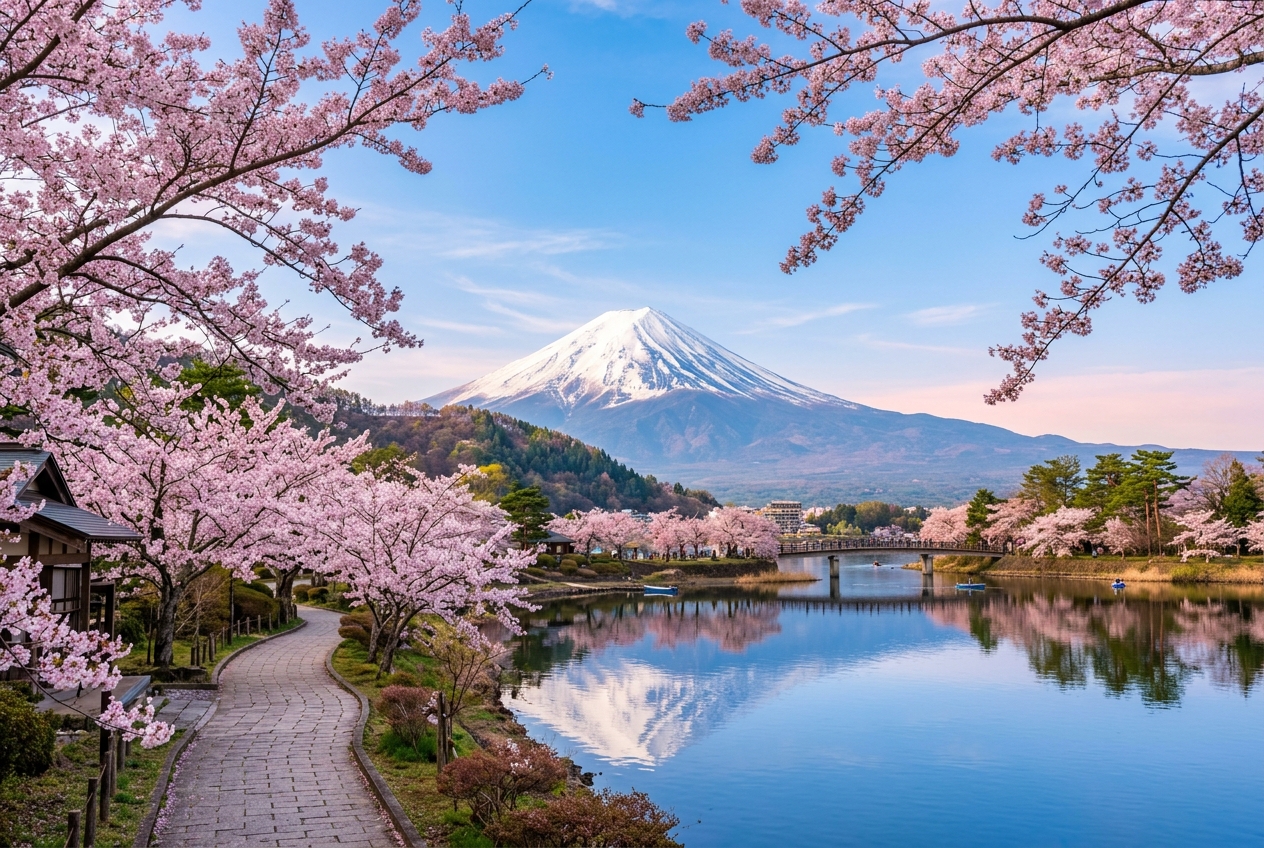
Study in Japan from Nepal
Japan combines world-class academic standards with a unique cultural heritage. For Nepali students, studying in Japan provides access to advanced research, industry-leading robotics/tech sectors, and an increasing number of English-taught programs, all at highly competitive costs.
Whether you are looking to study in Japan after 12th, enroll in a Master's degree, or complete a preparatory Japanese language course, Munich International Education provides trusted counseling and student visa guidance.
Work Rights
Up to 28 hours/week part-time
28 Hrs/wk
Student Work Rights
MEXT
Government Awards
Top Tier
UTokyo & Kyoto U
¥2.0M
Visa Proof Logs
Elite Innovation
Why Choose Japan
For Higher Education?
Japan is the world's third-largest economy and a global leader in automotive, technology, and engineering:
- Global Innovation Hub: Access state-of-the-art research in robotics, artificial intelligence, and engineering.
- Highly Affordable Tuition: Annual fees at public universities are significantly lower than Western destinations.
- Work Support: Earn extra income and practice language with permitted part-time work of 28 hours per week.
- MEXT government scheme: Access to fully funded Monbukagakusho awards covering airfare and stipends.
- Safe, Structured Lifestyle: Ranked consistently among the safest and most advanced societies in the world.
Quick Facts Checklist
Intakes: April (primary) and October (secondary) Instruction: English-medium and Japanese tracks Public Tuition: Approx. JPY 535,800 / year Living Costs: JPY 80,000 – 150,000 / month Visa Bank Logs: JPY 2,000,000 (~USD 13,000)
Study Options
Japanese Academic Pathways
Choose the pathway that aligns with your educational qualifications and career goals.
4-Year Undergraduate
Bachelor's Degree Programmes
Bachelor's degrees in Japan span 4 years. Direct entry is available, as well as preparatory paths via language schools to bridge language and academic levels.
Popular Fields
Engineering & Robotics Business Administration Tourism & Hospitality
English-taught programs let you study without JLPT requirements.
Apply for Bachelor'sPostgraduate level
Master's Programmes in Japan
Postgraduate study is highly research-focused, with leading national institutions like UTokyo and Tokyo Tech offering research tracks taught entirely in English.
Top Specialities
Robotics & Advanced Manufacturing AI & Data Sciences Environmental Sustainability
Apply for fully funded MEXT scholarships via embassy or university recommendation.
Apply for Master'sJapanese Language Course
Language Schools & JLPT Prep
Japanese language schools prepare you for JLPT certification (levels N5 to N1). Reaching Level N2 is the gateway to local employment and university admission.
Highlights
Intensive everyday modules JLPT N2 target benchmarks Visa conversion guidance
Ideal way to study, adapt, and build careers in Japan.
Apply for Language ClassFinancial Planning
Tuition Fees in Japan
Estimate your academic tuition costs across public and private universities in Japan.
| Academic Programme | Average Annual Tuition (JPY) |
|---|---|
| Bachelor's, public university | JPY 535,800 |
| Bachelor's, private university | JPY 900,000 – 1,300,000 |
| Master's, public university | JPY 535,800 |
| Master's, private university | JPY 800,000 – 1,200,000 |
Monthly Cost of Living in Japan
Monthly living costs typically range from JPY 80,000 to JPY 150,000. Tokyo and Osaka are higher, while smaller regional cities are highly affordable:
Rent / Housing
JPY 30K - 70K
Food & Dining
JPY 20K - 40K
Rail / Public Transport
JPY 5K - 15K
Personal Expenses
JPY 10K - 25K
Financial Logs: Visas generally require displaying proof of JPY 2,000,000 (~USD 13,000) bank logs from a sponsor.
Financial Awards
MEXT Government Scholarship
MEXT (Monbukagakusho) represents Japan's premier fully funded scholarship program for international students:
- Full Tuition: Covers 100% of all university fees and entrance fees.
- Monthly Stipend: JPY 117,000 to JPY 145,000 per month for living allowances.
- Travel Flights: Fully funded international round-trip flights between Nepal and Japan.
- Embassy Track exams: Written exams in Kathmandu followed by embassy credibility interviews.
Other Scholarship Schemes
JASSO Scholarship: Monthly stipends of JPY 48,000 for private excellence students. University waivers: Merit entrance reductions of 30%–100% at private universities. Prefectural/Local grants: Regional municipality funding opportunities.
Entry Criteria
Admission Requirements
Compile these key documents to apply to your chosen Japanese institution.
Academic Requirements
Undergrad: Completed 10+2 with strong scores Graduate: Bachelor's degree (GPA 3.0+ recommended) Statement of Purpose (SOP) & research proposals
Language Certifications
English-taught: IELTS 6.0 - 6.5 / TOEFL 72+ Japanese-taught: JLPT N2 or N1 levels English-medium studies can bypass IELTS if JLPT N5 is held
Your Roadmap
Japanese College Visa Process Steps
Follow our step-by-step timeline to secure your Japanese student visa.
Counseling & University Matching
We match your academic profile, budget, and goals to selected Japanese universities and language courses.
Application Pack Submission
We submit academic credentials, recommendation letters, and Statement of Purpose (SOP) to obtain your admission offer.
COE Issuance & Financials
The university applies to immigration for your Certificate of Eligibility (COE). We prepare financial logs (JPY 2,000,000).
Visa Filing at Kathmandu Embassy
Submit your COE, valid passport, and visa forms at the Embassy of Japan in Kathmandu, Nepal.
Arrival & Permission to Engage
Upon landing, register for "Activity Outside Visa Status" at airport customs to work up to 28 hours per week!
Have Questions?
FAQs — Study in Japan
Public university tuition is JPY 535,800 per year; private universities charge JPY 900,000–1,300,000. Monthly living costs range from JPY 80,000 to JPY 150,000. Total annual costs typically range from JPY 1,500,000 to JPY 2,500,000.
Yes. Many universities accept JLPT language scores, PTE, TOEFL, or Medium of Instruction (MOI) letters from prior English-taught studies in place of IELTS.
Yes. Students on a College Student Visa can work up to 28 hours per week during term semesters and full-time during vacations, after registering for outer-activity permission at customs.
Approximately JPY 2,000,000 (around USD 13,000) is recommended to be shown in a sponsor's bank statement to obtain the Certificate of Eligibility (COE).
The EJU (Examination for Japanese University Admission) evaluates Japanese language, mathematics, and science capabilities. It is required for most national university undergraduate admissions.